
Close
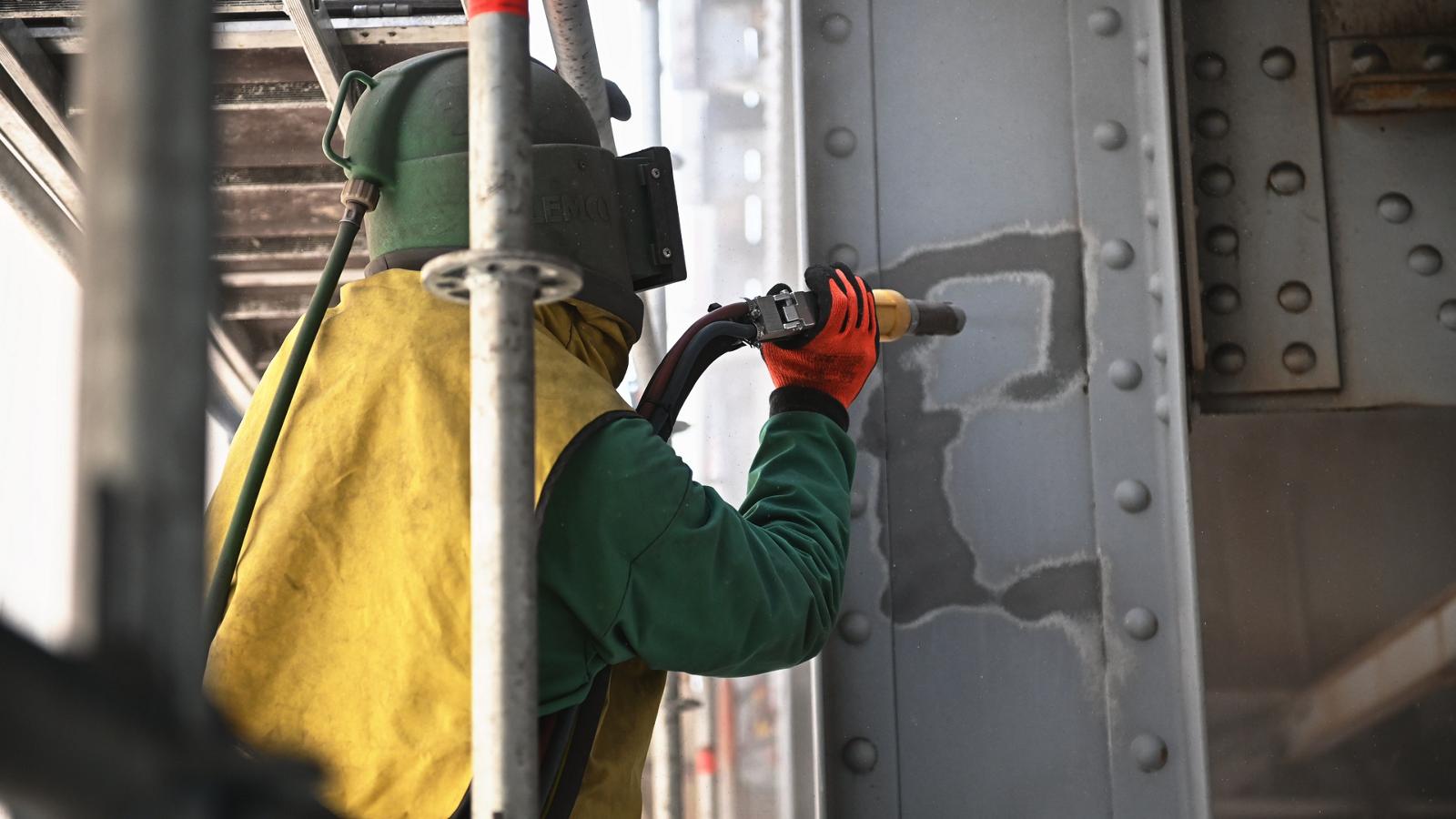
Sandblasting application

Compressed air solutions for industrial sandblasting

Also called abrasive blasting, this surface preparation method cleans and roughens materials for coating or finishing. It removes rust, corrosion, old coatings and other contaminants using fast‑moving abrasive media. A high‑performance compressor powers the nozzle, supplying the pressure and airflow needed for steady blasting performance.

Choose your pressure and flow

Different materials and preparation goals require specific pressure and airflow settings. Steel preparation, corrosion removal and coating removal each demand their own compressor configuration. With PACE, operators can easily adjust pressure and flow, allowing one compressor to handle multiple abrasive blasting jobs and increase overall flexibility.

High quality air for maximum uptime

Clean, dry air is essential for efficient blasting. Moisture can clog hoses and slow production, while oil can damage the surface finish. Atlas Copco aftercoolers, filters and reheaters deliver consistent air quality, protect the operator and equipment, and ensure reliable performance in demanding surface preparation environments.

Total cost of ownership

Atlas Copco compressors are designed for long-term value - combining efficiency, reliability, easy serviceability and high resale value. This makes them a cost-effective choice for sandblasting, abrasive blasting and a wide range of industrial surface preparation applications.

Reliable compressed air for consistent sandblasting results

Industrial sandblasting demands stable pressure, sufficient airflow, and consistent air quality to achieve uniform surface preparation. Variations in compressed air supply can directly affect blasting efficiency, surface finish, and productivity. Selecting the right compressor and air treatment setup is therefore essential for maintaining control, minimizing downtime, and delivering predictable results across abrasive blasting applications.


Which type of air compressor is best for industrial sandblasting?

Choosing the right portable air compressor is essential for efficient industrial sandblasting operations. Three parameters are critical: pressure, free air delivery, and compressed air quality. Correct compressor selection supports consistent blasting performance, stable operation, and reliable results across a wide range of sandblasting techniques. Below, we explain how Atlas Copco helps optimize each of these factors in demanding surface preparation environments.


3 key parameters to choose the right sandblasting compressor

1. Working pressure requirements for sandblasting applications

Based on the material (wood, cement, steel, ...) and the purpose (roughening, cleaning, surface hardening, ...), sandblasting applications need a different pressure. Industrial sandblasting applications therefore require adjustable pressure control. Atlas Copco's PACE compressors provide the possibility to adjust the pressure according to the application's needs and help increase the versatility.

Pressure defines the power of the compressed air stream. Higher pressure increases blasting performance, but it also increases reaction forces at the nozzle, which can make the operator more easily fatigued during prolonged work. Finding the right balance is therefore important in industrial sandblasting. For hard steel surfaces, a nozzle pressure of around 100 PSI typically offers a well‑balanced setting, depending on the operator and application.

As the compressed air goes through the sandblasting machine and hoses, it causes a pressure drop and therefore less productivity. Normally, the sandblasting productivity will reduce 1.5% as the pressure reduces 1% based on 100 PSI. Maintaining optimal nozzle pressure is therefore key to consistent output, and a pressure-adjustable compressor in this case, will make this happen.


2. Free air delivery (FAD) requirements for sandblasting

In sandblasting, all the compressed air will go through the nozzle. The nozzle size and working pressure will define free air delivery (FAD) consumption. Insufficient FAD will cause lower working pressure of the nozzle and reduce productivity.

Stable free air delivery is therefore critical for industrial blasting efficiency. Our Pressure Adjusted through Cognitive Electronics (PACE) technology will increase the FAD of the compressor as the pressure is reduced, helping match FAD to the specific requirements of your sandblasting application. 


3. Compressed air quality requirements for sandblasting

The quality of the air is always an important factor: both for the operator and for the application itself. The less oil and moisture in the compressed air, the healthier it is for the operator. With sandblasting, moisture in the compressed air may cause the hose to be clogged, increasing the downtime. The presence of oil on the other hand may also contaminate the blasting surface. High-performance aftertreatment, aftercooler, filter and reheater systems ensure controlled compressed air quality for demanding industrial sandblasting environments.

Temperature, exposure to contaminants, such as moisture or oil, and the overall quality of the blast medium are among the key variables in determining the most suitable compressor and air treatment configuration.  

Whatever your project specifications, Atlas Copco has a compressed air solution to match your sandblasting requirements.


Customer success story: Reliable boat maintenance in coastal environment

Atlas Copco's XATS 156 is used for hull maintenance, painting and sandblasting

Breaking the concrete deck with pneumatic air hammers and saws

Pendennis Vilanova, a luxury superyacht refit yard on Spain’s Mediterranean coast, relies on Atlas Copco’s electric E‑Air H450 VSD and XATS 156 portable air compressors for consistent, efficient performance in harsh marine conditions. The compressors support key maintenance tasks such as abrasive blasting and hull cleaning during antifouling work. Their corrosion‑resistant build, sealed motor, aftercooler, and water separation systems ensure reliable operation in salty, humid environments—reducing downtime, extending service life, and delivering clean, dry air for high‑quality results.

Atlas Copco’s portable air compressors are vital to our daily operations. Whether it's hull maintenance, painting, or sandblasting with epoxy, their efficiency in salty coastal environments ensures an uninterrupted workflow. Moreover, their long-term durability makes them a reliable investment for the future.

Daniel Tabernero , Engineering Manager at Pendennis Vilanova

Frequently asked questions about sandblasting

Industrial sandblasting combines compressed air, abrasive media, and carefully controlled operating parameters to achieve effective surface preparation. The following frequently asked questions explain how the sandblasting process works, where it is commonly used, and what to consider when selecting compressors for reliable industrial sandblasting applications.


What is the sandblasting process?

Sandblasting, or abrasive blasting, is a highly effective method for industrial surface preparation. It uses compressed air to propel a controlled stream of abrasive blast media through a nozzle at high speed. This removes rust, mill scale, old coatings, grease, and other surface contaminants.


Sandblasting is commonly used on metal, concrete, and composite materials for rust removal, corrosion removal, and surface cleaning. A trusted process in industrial applications where a clean, properly prepared surface is essential.


Abrasive blasting also creates a controlled surface profile that improves coating adhesion and supports longer-lasting surface performance. It can be used as a final finishing technique or as preparation for painting, coating, or further surface treatment.


Depending on the material and application, different abrasive media can be used, such as aluminium oxide, glass beads, copper slag, garnet, walnut shells, and other engineered blast media. Choosing the right abrasive depends on the substrate, the blasting technique, and the finish or surface profile required.

In which applications is industrial sandblasting commonly used?

Sandblasting is commonly applied to restore surfaces to their original condition or to prepare them for coating, lining or repair. Industrial sandblasting is widely used across steel fabrication, infrastructure maintenance, shipbuilding, energy production, manufacturing and heavy‑duty applications such as heavy equipment refurbishment. Typical applications include surface preparation prior to coating, corrosion and coating removal, weld cleaning, and refurbishment of steel, concrete and other industrial substrates.

What power source is best for industrial sandblasting compressors?

The most suitable power source for industrial sandblasting compressors depends on site conditions and power availability. Electric compressors are commonly used where grid power is available and stable, while engine‑driven compressors are preferred for remote or temporary sites where mobility and independence from fixed power infrastructure are required. Both options can reliably support sandblasting equipment when correctly sized for the application.

What size air compressor is required for industrial sandblasting?

The required compressor size depends primarily on the nozzle diameter, working pressure and duty cycle. Industrial sandblasting is a continuous, high‑airflow process, meaning the compressor must deliver sufficient free air delivery at the required pressure without drop‑off. Undersized compressors reduce blasting efficiency and consistency, while correctly sized units maintain stable output, controlled airflow and predictable productivity in demanding abrasive blasting operations.

Our compressor range supports high productivity, efficient utilization, controlled operating costs, and enhanced safety for industrial sandblasting and abrasive blasting projects. Our team of experts can help define your requirements and identify the right compressor and air treatment solution for your sandblasting project.


Continue reading