

10 steps to a green and more efficient production

Carbon reduction for green production - all you need to know
10 steps to green compressed air production

Everything you need to know about your pneumatic conveying process

Discover how you can create a more efficient pneumatic conveying process.
3D images of blowers in cement plant
Zatvori

Kako izabrati odgovarajuće ulje za kompresor prema vašim potrebama

Spoj vašeg sistema komprimovanog vazduha, konkretne namene i uslova rada je jedinstven. Da biste dobili najbolje rezultate i pouzdanost postavke sistema, neophodno je napraviti i pravi izbor kompresorskog ulja.

28.11.2025.

Why compressor oil selection matters

Najvažniji parametri koji utiču na na trajanje i karakteristike ulja su: temperatura sredine, prašina, kvalitet vazduha i vlažnost. Ovi parametri se nazivaju i spoljni uslovi, a omogućavaju da se definiše upotreba ulja kao: blaga, zahtevna ili ekstremna. 

Koje kriterijume treba uzeti u obzir prilikom izbora?

Da biste napravili pravi izbor ulja, neophodno je da dobro poznajete operativne uslove rada kompresora. Temperatura, kvalitet vazduha i vlažnost igraju veliku ulogu pri izboru odgovarajućeg ulja. 

Temperatura

Temperatura je najvažniji parametar pri izboru.

Prvi uslov na osnovu koga odlučujete se zasniva na poznavanju izlazne temperature kompresora ili spoljne temperature. Ove temperature se iskazuju u različitim opsezima. Ukoliko je moguće, izbor bi trebalo vršiti pre svega na osnovu izlazne temperature komprimovanog vazduha. Kada ovaj podatak nije dostupan, spoljna temperatura može biti dobar indikator. 

Kvalitet vazduha

Sledeći parametar koji ćete uzeti u obzir je zagađenost prašinom ili kvalitet vazduha u kompresorskoj prostoriji. Na primer, fakbrika cementa se smatra mestom koje je prilično zagađeno prašinom u poređenju sa fabrikom automobila, koja predstavlja čisto okruženje. U nekim zemljama, prosečni nivo prašine može biti viši od standardnog proseka. Zato, ovome treba pristupiti shodno vašem slučaju.

Vlažnost

Poslednji parametar koji utiče na donošenje odluke je vlažnost, gde se zemlje sa tropskim šumama ili monsunskom klimom smatraju vlažnimpodnebljem. Takođe, u zavisnosti od uslova u samoj kompresorskoj sobi/stanici, ulazni vazduh može imati visok nivo vlažnosti.

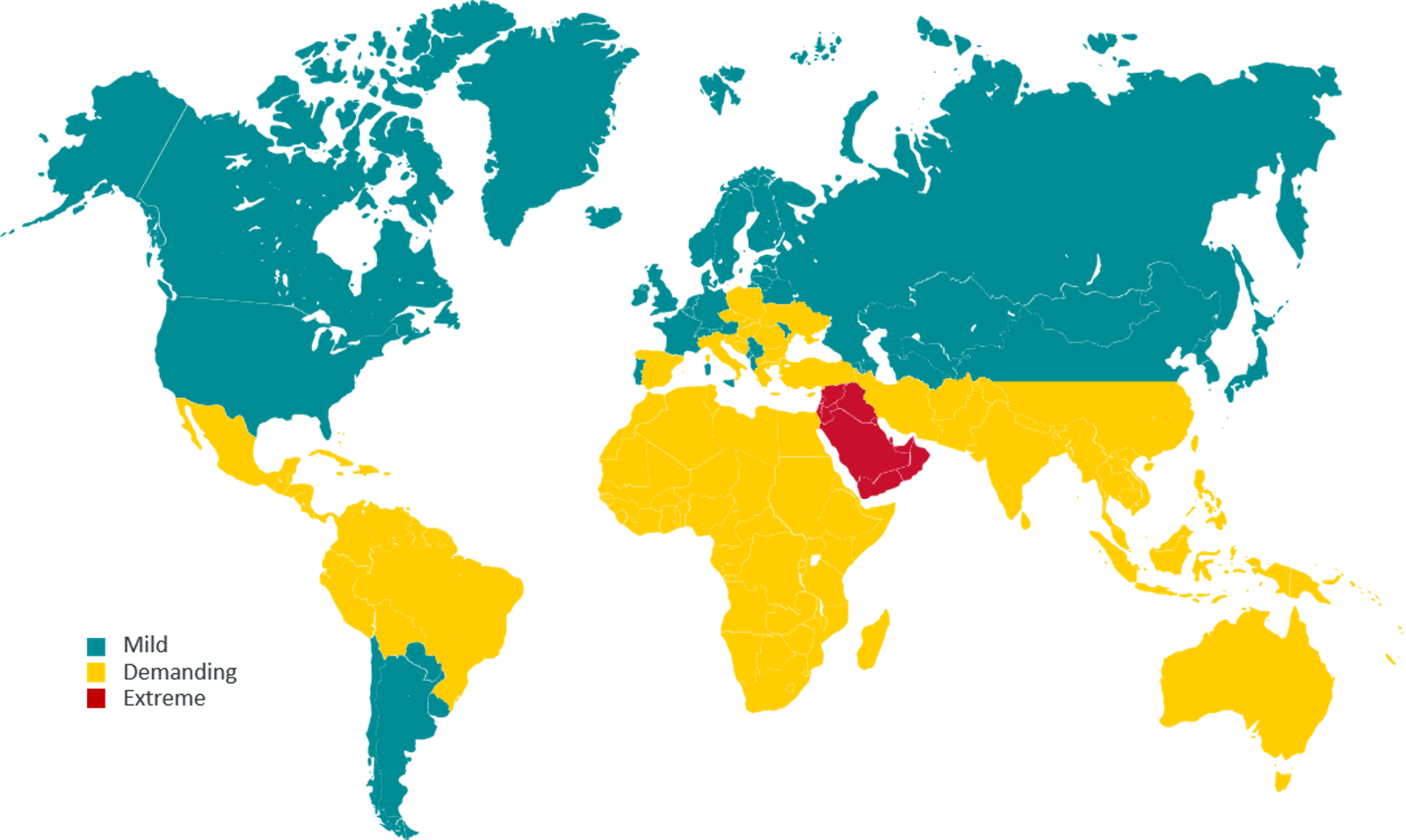
20210113-temperature.jpeg

Prikaz rasprostranjenosti uticaja vlažnosti okoline

2. Air quality

Second condition to decide on, is dust contamination or air quality in the compressor room. As an example: a cement factory can be seen as a dusty environment compared to an automotive company which is expected to be a clean environment. In certain countries, the average dust levels can also be higher than the average standard. It needs to be assessed on a case by case basis.

The quality of intake air affects oil degradation.

  • Dust and contaminants can mix with oil, forming sludge and reducing efficiency.
  • Clean air environments allow oil to last longer and maintain its properties.
the contaminants in compressed air

3. Humidity

Last condition to be decided on is the humidity, where countries with a tropical rainforest or monsoon climate are seen as humid countries. Also depending on the compressor room conditions, the intake air can have a high humidity level.

Moisture is a silent enemy for compressors.

  • High humidity can lead to water contamination in oil, causing rust and reducing lubrication.
  • Dry environments pose fewer risks, but condensation during shutdowns can still occur.

Oil selection criteria table

Temperature

Humid

Dust

Type

Element outlet < 95°C (203°F)
or
Ambient < 30°C (86°F)

N

N

Mild

Y

N

Mild

N

Y

Mild

Y

Y

Demanding

95°C (203°F) < Element outlet < 105°C (221°F)

or
30°C (86°F) < Ambient < 40°C (104°F)

N

N

Demanding

Y

N

Demanding

N

Y

Demanding

Y

Y

Extreme

Element Outlet > 105°C (221°F)     or    Ambient > 40°C (104°F)

-

-

Extreme

Recommended oil lifetime

  Mild Demanding Extreme
  2.000 Hrs 4.000 Hrs 8.000 Hrs 2.000 Hrs 4.000 Hrs 8.000 Hrs 2.000 Hrs 4.000 Hrs 8.000 Hrs
RIF Ndurance  

         
RS Ultra


RS Xtend Duty


Radite u industriji hrane i pića?

Pogledajte naš predlog ulja za kompresore u prehrambenoj industriji

Common questions

What factors affect compressor oil life?

Compressor oil life is influenced by ambient temperature, air quality, and humidity. These conditions determine whether your application is mild, demanding, or extreme, which impacts oil performance and replacement intervals.

How do I classify my operating conditions?

  • Mild: Clean air, moderate temperature, low humidity
  • Demanding: Some dust, temperature fluctuations, moderate humidity
  • Extreme: High dust levels, extreme temperatures, high humidity
  • What happens if I use the wrong oil in my compressor?

  • Poor lubrication: Increased wear on parts
  • Overheating: Wrong viscosity fails to dissipate heat
  • Sludge and deposits: Faster oxidation clogs filters
  • Moisture issues: Rust and corrosion in humid conditions
  • Higher energy costs: Reduced efficiency and more strain
  • What is the difference between synthetic and mineral compressor oil?

    Synthetic compressor oil offers superior thermal stability, oxidation resistance, and longer service intervals, making it ideal for extreme temperatures and demanding conditions.
    Mineral compressor oil is suitable for mild operating environments but requires more frequent changes.

    Can I use Atlas Copco oil in other compressor brands?

    Yes, Atlas Copco compressor oils can often be used in other brands, provided the oil meets the manufacturer’s specifications for viscosity, additives, and operating conditions. Always check the OEM guidelines before switching oils to avoid warranty issues or performance problems.

    Lubricants Service Parts