All about roots blower: how it works, applications and more
Roots blowers have been used for decades in industries that depend on a steady and dependable air supply. These machines are known for their straightforward design and consistent performance in low-pressure applications. In this article, we look at how they work, where they are used, and what sets them apart from other blower technologies.
What is a roots blower?
A roots blower is a positive displacement blower that moves a fixed volume of air from the inlet to the outlet using two counter-rotating lobes. As the lobes turn inside the housing, they trap pockets of air and carry them around the casing to the discharge side. Unlike some other air technologies, a roots blower does not compress the air internally. Instead, the pressure builds when the air reaches the outlet and meets the resistance of the system.
How does a roots blower work?
The working principle of a roots blower involves transporting a fixed volume of air from the inlet to the outlet port. Two symmetrical, shoe-shaped rotors rotate in opposite directions within a housing. These rotors mesh without touching, maintained by a very small clearance.
As the rotors turn, air is trapped in the space between the lobes and the casing wall. This trapped air moves around the perimeter at a constant volume, which is a process known as isochoric compression.
The principle of isochoric compression
Unlike many compressors, a roots blower does not compress air internally. Instead, the compression happens externally at the discharge when the trapped air meets the back-pressure of the connected system. This results in a pressure increase at the outlet.
The relationship between the intake and discharge temperatures for an ideal gas in this process is defined by the formula:
In this formula:
- T₂ = Final Temperature (Outlet Temperature).
- T₁ = Initial Temperature (Inlet Temperature).
- P₂ = Final Pressure (Outlet Pressure).
- P₁ = Initial Pressure (Inlet Pressure).
- k = Specific Heat Ratio (Isentropic Index). For standard air, k is approximately 1.4. (Sometimes written as the Greek letter gamma, γ).
Note: For this formula to work correctly, temperatures must be in absolute units (Kelvin or Rankine) and pressures must be in absolute units (like psia or bar absolute), not gauge pressure.
The role of timing gears
Precision is vital for the operation of these machines. A set of synchronizing timing gears ensures the rotors maintain their phase and never come into contact with each other. This non-contact design allows the rotors to operate at high speeds without the need for lubrication in the compression chamber, ensuring the delivered air remains oil-free.
What are roots blowers used for?
Roots blowers are valued in industries that require a continuous, reliable flow of air at low-to-medium pressures.
- Wastewater treatment and aeration: In municipal and industrial wastewater plants, blowers provide the oxygen necessary for aerobic bacteria to break down organic waste. Roots technology is often chosen for its ability to provide a consistent airflow regardless of variations in the water level or diffuser resistance.
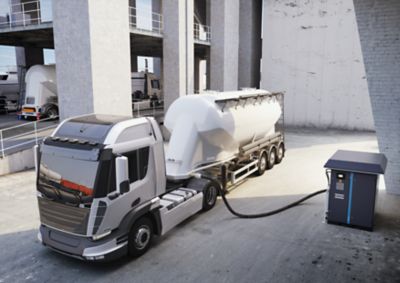
- Pneumatic conveying of bulk solids: Moving dry materials like cement, fly ash, grains, or plastic pellets through a pipeline requires high-volume air. The roots blower acts as a powerful air mover, capable of overcoming pipeline friction to transport materials safely and cleanly.
- Aquaculture and pond oxygenation: Healthy aquatic environments depend on dissolved oxygen. Blowers are used to aerate fish ponds and tanks, ensuring fish and other aquatic organisms have the oxygen levels required to thrive. Oil-free delivery is particularly critical here to avoid contaminating the water.
Roots blower vs other blower technologies
When selecting a blower, engineers often compare roots technology to rotary screw blowers or centrifugal machines. A traditional roots blower is reliable and has a lower initial cost, but it is generally less efficient than a screw blower.
For example, to deliver approximately 1600 m³/h at 0.8 bar(g), a tri-lobe roots blower (such as the ZL3 55) has a package power consumption of 53.1 kW. In contrast, a screw blower under the same operating conditions consumes only about 39 kW. This makes screw blowers a more cost-effective choice for continuous-duty applications where energy savings are a priority.
Air purity and oil-free operation
For sensitive processes in the food, pharmaceutical, and electronics industries, air quality is non-negotiable. Roots blowers provide oil-free air because no lubricant enters the compression chamber.
Defining your air purity requirements is a critical step in system design, ensuring downstream equipment and end products remain protected from contamination. To achieve the highest air quality standards, oil-free equipment must be used.
Need to optimize your aeration or conveying process?
Discover our range of reliable roots and energy-efficient screw blowers designed to meet your specific pressure and flow requirements.
FAQs on roots blower
What's the difference between a roots blower and a compressor?
A roots blower is technically a type of positive displacement compressor, but in practice it is usually used as a low-pressure blower. It moves a large volume of air, has no internal compression, and compresses against the system back-pressure at the outlet. That makes roots blowers a strong fit for aeration and pneumatic conveying, while compressors are generally chosen when the process needs higher pressure.
What pressure can a roots blower achieve?
Roots blowers are designed for low-pressure applications. They are commonly used in the 0.3 to 1.0 bar(g) range, although the exact pressure depends on the model, operating speed, gas temperature, cooling, and whether the unit is single-stage or multi-stage. In general, roots blowers are selected when the process needs high flow at relatively low pressure.
How do you compare a roots blower to a side channel blower?
The primary difference lies in performance stability and design: a Roots blower is a robust, positive-displacement machine that maintains a constant airflow even as pressure increases, making it the more efficient choice for demanding industrial tasks like pneumatic conveying. In contrast, a side channel blower is a compact, lower-cost alternative ideal for lighter applications below 300 mbar, offering the versatility of both vacuum and overpressure service. However, side channel blowers are less energy-efficient and suffer from a significant performance drop-off, where airflow decreases rapidly as system resistance rises.
What is a lobe booster?
A lobe booster usually refers to a rotary lobe, or roots-type machine, used to increase airflow, pressure, or vacuum system performance. In blower applications, the term is often used for a rotary lobe blower. In vacuum applications, it can also describe a roots-principle booster that works together with a backing pump to increase pumping speed and improve overall system performance.
What is the structure of a roots blower?
A roots blower typically consists:
- A housing
- two counter-rotating lobes or rotors
- timing gears, keep the lobes synchronized
- shafts
- bearings
- inlet and outlet ports
In packaged units, you will also usually find an inlet filter and silencer, an outlet silencer, and the drive system that transfers power from the motor to the blower element. The lobes rotate without touching each other, which helps support reliable operation.
Related articles
30 June, 2022
There are a lot of things you have to consider when choosing an air compressor for your business. In this article we will explain what compressor is best suited for you, based on your application and needs.
30 June, 2022
Learn how screw air compressor technology works.
10 October, 2024
Compressed air is all around us, but what is it exactly? Let us introduce you to the world of compressed air and the basic workings of a compressor.