
How to Design an Efficient and Safe Compressor Room
November 19, 2025
The design of an industrial compressor room plays a decisive role in ensuring an efficient and reliable supply of compressed air. Whereas compressors used to be assembled from numerous individual components, they are now generally delivered as compact units. A well-designed central compressor room offers many advantages, such as easy monitoring, better sound insulation, and effective ventilation. When choosing a room, aspects such as noise emissions, ventilation, heat dissipation, and condensate drainage must be taken into account.

In this blog post, we will discuss the above-mentioned elements in detail and you will also learn more about potentially hazardous environments in order to ensure trouble-free operation and simplified maintenance.
How To Plan an Industrial Compressor Room
Not so long ago, the compressor, electric motor, starter, aftercooler, and intake filter had to be purchased separately. Requirements and interfaces had to be discussed with each supplier to ensure that all parts could be assembled and that the compressor would function properly.
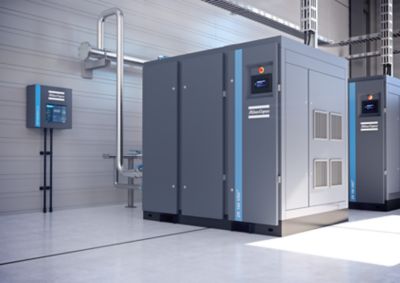
Today, compressors are delivered as ready-to-use systems, mounted on a single frame on which all the individual components are installed. All the necessary internal connections between the various components are already in place. The entire compressor is also equipped with a soundproof cover to reduce the sound pressure level.
This development greatly simplifies the installation of a compressor and ensures that all parts are correctly dimensioned and function reliably. However, it is important to note that the type of installation and the technology used still have a decisive influence on the long-term reliability and efficiency of the system.
Why Install Compressors in a Dedicated Room
In principle, a separate room should be provided for the installation of compressors, ideally centralized in your production centre. This arrangement facilitates monitoring, improves user-friendliness and ease of maintenance, allows better control of access to the compressor room, provides better sound insulation, and simplifies ventilation and air conditioning planning.
A designated room in a building can serve perfectly well as a compressor room if it meets the following criteria:
- Compressor noise level
- Possibility of ventilating the room
- Heat dissipation from the compressor room
- Condensate drainage
- No corrosive or explosive products in the air or environment
- Space required for future extensions
- Easy access for maintenance
Outdoor Installation of Compressors
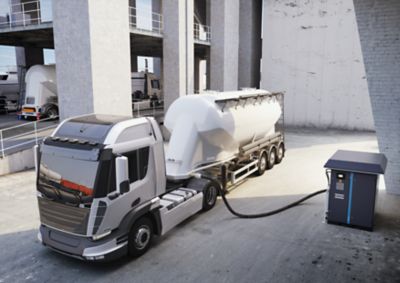
If no space is available inside the building, the compressors can also be installed outside under a canopy. However, the compressors must then be prepared for this purpose, for example with a rain protection kit or a winter kit.
The aim is to prevent moisture from penetrating under the soundproofing cover or condensate or cooling water from freezing. In addition, the air inlet and outlet openings are protected by suitable shutters. As with indoor installation, flat installation surfaces, protection against dust and other aggressive agents, and the necessary access, e.g., for maintenance, must be provided.
Compressor Room Layout and Design
The central compressor room should be located in such a way as to facilitate the distribution of compressed air as much as possible, even in the case of an extensive compressed air network. For maintenance and servicing reasons, it may be advantageous to locate the compressor room as close as possible to other installations, such as pumps and fans. Even a location next to the boiler room can be advantageous, for example, if the recovered heat is used to heat the premises.
Ideally, the compressor room should be equipped with appropriate lifting devices (crane track) so that the heaviest components of the compressor (usually the electric motor) can be moved. It is often advisable to allow a little space for possible expansion of the compressor.
Inside the compressor room, a connection to the sewage system must be provided to drain condensate from the compressors, aftercoolers, and dryers. If condensate treatment is necessary, it must comply with local regulations.
Compressor Room Foundations
As a rule, a level floor with sufficient load-bearing capacity is sufficient for installing a compressor. Since the necessary vibration dampers are usually already integrated into the compressor, no further measures are required with regard to vibration transmission. Large piston compressors may require special measures, such as foundations that are firmly anchored in the ground and separated from the building foundations. In modern screw compressors, the effects of vibration have been reduced to a minimum. In the case of installations equipped with turbo compressors, it may be necessary in certain circumstances to take additional measures to dampen the vibrations transmitted to the floor of the compressor room.
The Compressor Room and Intake Air: What Should You Pay Attention To?
The intake air for a compressor must be clean and free of contamination as far as possible. Dust particles and corrosive gases in the intake air can cause increased wear and damage to the compressor.
Normally, air is drawn into the soundproof hood. However, in certain circumstances, such as excessively high ambient temperatures or heavy pollution, it may sometimes be advisable to draw air from another, cleaner location. Gaseous impurities, such as exhaust gases from a combustion engine, can have negative effects if the air is to be inhaled. Hospitals therefore impose particularly high requirements on the location of the air intake. If the ambient air contains too much dust, a pre-filter (cyclone or belt filter) must be used to prevent excessive pressure in the compressor.
For compressed air and cooling air (engine cooling air/compressor cooling air), care must be taken to ensure that the air temperatures are between 1°C and 40°C. It often makes sense to feed the supply air to the compressors through ducts from the outside.
It is very important to dimension these suction ducts sufficiently in order to keep the flow velocity in the ducts as low as possible. High air velocities in ducts can cause acoustic problems. In addition, ducts, especially those with many bends and built-in elements, always generate flow resistance that must be overcome during both suction and hot air exhaust.
The design of suction pipes for piston compressors is particularly critical. If the design is incorrect, the resonances generated by the compressor can damage it, cause additional vibrations, and increase the acoustic pressure.
Compressor Room Ventilation
During operation, compressors generate heat that must be removed by adequate ventilation of the compressor room to prevent overheating and damage to the equipment. The intensity of ventilation required varies depending on the size of the compressor and the cooling medium used. In the case of air-cooled compressors, the cooling air must absorb almost all of the power supplied in the form of heat. In order to maintain the ambient temperature at an acceptable level, the cooling air flows must be discharged in a targeted manner.
Manufacturers can provide precise specifications regarding the required ventilation. However, an even more effective method than simply releasing heat into the outside air is to recover and reuse this energy.
Cooling should be achieved via ducts that are as short as possible and an external supply, ideally from a shaded location in order to use the coldest air. In addition, the intake opening should be equipped with a weather protection grille to prevent rain or snow from entering. In the case of longer ducts, an additional fan may be necessary to ensure a constant supply of air to the compressor. It is also important that the intake opening is not blocked by snow in winter and that no hazardous substances such as dust or exhaust fumes can be sucked in.


