
Pneumatic conveying systems for flour
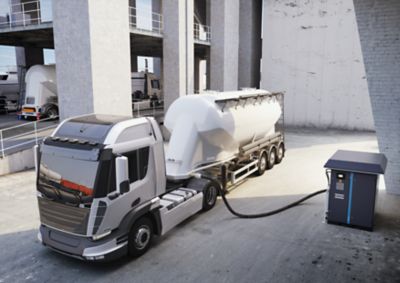
When all types of flour (wheat, rice, soybeans, rye, oats, etc.) are counted together, it is the world’s most produced food. This also means that a staggering amount of flour has to be moved every single day – an average of more than 2 million metric tons of wheat flour alone. Entire fleets of ships, trains and trucks are used to transport it from one place to another. Pneumatic conveying is an efficient way to (un)load flour or to move it around production and process facilities.
Efficient flour conveying

There are a number of reasons that make pneumatic conveying the best way to efficiently transport flour in general and wheat flour in particular. If you have the right equipment, at least. There are several things to consider to truly benefit from the many advantages pneumatic conveying has to offer. First, there is the material itself: Wheat flour, for instance, is a relatively fine material (smaller than 0.3 millimeters). That means it can be transported using different methods or “phases” of pneumatic conveying, which offers great flexibility. In the case of wheat flour, both dilute and dense phase conveying can be used, which makes it a great product of pneumatic conveying. Next, you need to look at the size of your new or existing installation. Making sure you have right flow and air pressure for the type of flour you’re conveying. This will help you create a smooth and efficient conveying process. An incorrectly sized blower or compressor could lead to high energy bills, frequent blockages, and long unloading times.
Safety & quality guidelines when conveying flour
When choosing the right equipment for your flour conveying system, quality and safety are two important matters. This includes both the physical safety of the production/processing facility as well as the issue of food safety. While flour is not deemed to be dangerous, it is a flammable material when moved in bulk and could combust. In addition, as a food, it is subject to stringent quality standards. For both reasons, wheat flour needs to be transported at a temperature not exceeding 40°C. Anything above could trigger an explosion or diminish the quality of the flour.
When conveying materials for food production, such as flour, it is also important to use oil-free blowers, compressors as the air comes into direct contact with the material. Oil-free air blowers and compressors ensure that there is no oil contamination of your product.
Designing the perfect pneumatic conveying systems for flour
A well-designed pneumatic conveying system for wheat flour addresses all of these issues and allows a large volume of it to be moved efficiently and safely without impacting the quality of the flour.
Oil-free air blowers and compressors for flour conveying
To make sure your installation is as efficient as it can be, you need a correctly sized blower or air compressor. Defining the right size of compressor or blower can be difficult and often requires specialized software. Even if you’re dealing with an existing installation, a one-on-one replacement of the old equipment is often not the most efficient solution. Make sure to do a sizing check before you invest in a new blower or compressor.
On top of that, make sure your compressor or blower delivers Class 0 certified or oil-free air. The Class 0 certification ensures there is no oil added to the air during the compression process.
Eliminating explosion risks
In order to convey the flour in the safest way possible, your blower, compressor and any possible ancillaries need to be certified to operate in high-risk environments. A standard product will not do as certain design changes will need to be made to ensure your compressed air system is safe for operation. Once you know which specific local guidelines are applicable for the type of material and environment you’re dealing with, a custom solution for your conveying process can be built.
Aftercoolers
In addition to a compressor or blower, you will need an aftercooler, to get the air temperature below 40°C. This to ensure the flour is not burned and that it does not combust.
To guarantee that your pneumatic conveying system for flour is safe, you should always make sure that the relevant equipment is certified according to the local guidelines. This ensures safe operation and minimizes explosion risks when working with combustible materials such as flour.
Some compressors, feature an integrated aftercooler. In the case of a blower, however, it will have to be installed separately. If you decide to use a water-cooled aftercooler, it may also be necessary to add a chiller. It lowers the water temperature to a manageable and constant level to ensure that the aftercooler can do its job.
Water separator or dryer
Because the cooling process with an aftercooler creates moisture, the system also needs a water separator or dryer to protect the quality of the wheat flour. Most integrated aftercoolers come with an integrated water separator. For some specific cases, a dryer instead of a water separator can be used to remove the moisture from the air.
The role of fluidization for flour
Compressed air can also be used for the so-called “fluidization” process when conveying flour from a silo. Here, very low-pressure air is injected at the bottom side walls of the silo. This ensures that the flour does not stick to the sides of the silo and makes it easier to convey, which reduces energy costs. Conveying with such a low pressure usually doesn’t require any ancillaries. However, all (raw) materials used for food production need to comply to certain high quality standards. So, your fluidization system for flour does require an aftercooler and water separator or dryer to ensure the flour remains at top quality.
Need help optimizing your flour conveying system?
Not sure how to replace your old compressed air system with a new one? Let us help you. The right size of installation is crucial: not only does it help you save on energy costs, it also shortens unloading times and helps you avoid blockages. Calculating the right size of installation is difficult and requires specific software and skills. We can help you find the optimal dilute phase pneumatic powder conveying system by offering you a free sizing calculation.
Checklist for flour conveying systems
- Correctly sized air blower or compressor
- Class 0 certified
- Certified for operation with combustible materials
- Aftercooler to cool the air
- Water separator or dryer to remove moisture
