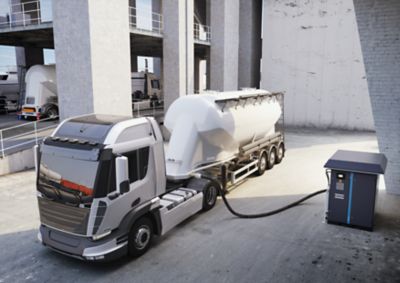
10 steps to a green and more efficient production

Carbon reduction for green production - all you need to know
10 steps to green compressed air production

Everything you need to know about your pneumatic conveying process

Discover how you can create a more efficient pneumatic conveying process.
3D images of blowers in cement plant
Close

Piston air compressor guide: types, benefits & costs

Displacement Compressors Compressor Types Air compressors Compressed Air Wiki Piston compressors

Learn the fundamentals of piston compressors, their types, operational principles, and the specific benefits they offer across various industries. From their straightforward mechanical design to their adaptability to high-pressure applications, piston compressors are widely used in the world of compressed air.

What is a piston compressor?

Tank mounted piston compressor

piston compressor uses reciprocating piston movement to compress air, making it the most common industrial air compression solution. Also known as a reciprocating air compressor, it is the oldest and most widely used compressed air technology across industrial, commercial, and workshop settings.


Using a simple mechanical design of pistons, cylinders, and a crankshaft, piston compressors compress air through displacement compression as the piston moves back and forth. This proven working principle explains their long-standing reliability and widespread use.

How does a piston compressor work?

The rotating crankshaft drives the piston within the cylinder, creating alternating low- and high-pressure zones that enable air compression. This mechanism results in a naturally pulsating airflow, characteristic of piston air compressors.

The compression cycle itself consists of four phases. During the intake (suction) stroke, piston displacement increases cylinder volume and opens the inlet valve. In the compression stroke, both valves remain closed while the piston reduces volume and raises pressure according to the compression ratio. Once internal pressure exceeds downstream pressure, the discharge stroke begins and compressed air is expelled. The return stroke completes the cycle and prepares the system for the next intake phase.


In single-acting compressors, compression occurs on one piston side per revolution. Double-acting compressors compress air on both strokes, increasing capacity and improving volumetric efficiency. Overall performance depends on valve timing, clearance volume, piston speed, and crankshaft rotation accuracy.

Main components of piston compressor

  • Piston: It is a cylindrical-shaped component that moves back and forth inside the cylinder. This repeated up-and-down motion creates the reciprocating movement required for air compression.
  • Crankshaft: Transforms motor rotation into piston movement, thereby enabling air compression. An electric motor drives the crankshaft’s rotation, which is converted into linear piston movement inside the cylinder.
  • Cylinders: They are closed at one end and open at the other. As the piston moves downward during the suction stroke, air enters through the intake valve. When the piston moves upward, the air is compressed and released through the outlet valve.
  • Valves: Most piston compressors use self-acting valves. These valves open and close automatically due to pressure differences on either side of the valve disk, allowing air in during suction and preventing backflow during compression.

Types of piston compressors

Piston (reciprocating) compressors can be classified based on how they compress air, how they are lubricated, how compression stages are arranged, and how heat is removed. Understanding these distinctions helps you select the right compressor for pressure level, air quality, duty cycle, and application.

By action type

  • Single-acting piston compressors compress air on one side of the piston only. Each crankshaft revolution produces one compression stroke, while the return stroke draws in fresh air. This simple, cost-effective design is common in workshops, light industrial use, and OEM applications.
  • Double-acting type compress air on both the upward and downward piston strokes. Air is alternately drawn in and compressed on each side of the piston, effectively doubling capacity for the same piston size. This results in higher output, smoother airflow, and better efficiency, making them suitable for industrial and higher-demand applications.

By lubrication

  • Oil-lubricated use splash or pressure lubrication to protect bearings, crankshafts, and cylinder walls. Oil-scraper rings minimize oil carryover, and the design is robust and service-friendly. However, trace oil may be present in the compressed air.
  • Oil-free significantly reduce oil in the compression chamber. Pistons and seals are made from materials such as PTFE, Teflon, or carbon. Cooling is handled through design features like cooling fans and pipes. These compressors are chosen when ISO 8573-1 Class 0 air quality is required, for example in food, pharmaceutical, electronics, or medical applications.

By stage configuration

  • Single-stage compress air to final pressure in one step and are suitable for low to moderate pressures.
  • Multi-stage divide compression into two or more stages with intercooling between stages. This reduces the compression ratio per stage, improves efficiency, lowers discharge temperature, and enables much higher final pressures.

By cylinder configuration

  • Vertical: Typically single-stage, compact and mechanically simple.
  • V-design: Common in two-stage compressors, with a large low-pressure cylinder feeding a smaller high-pressure cylinder.
  • W-shape: Enables three-stage compression with good load balance.
  • Star-shape: Used for three- or four-stage designs, allowing very high pressures in compact layouts.

By cooling method

  • Air-cooled compressors use fins and airflow, offering simplicity and lower investment.
  • Water-cooled compressors provide more stable temperatures and support higher duty cycles for continuous industrial operation.

Applications and industries

Piston compressors (both industrial and professional models) deliver high pressure with low air volume, making them ideal for intermittent, demanding applications where reliability and precise pressure control are essential.


  • In manufacturing, they power pneumatic tools, automation systems, and paint spraying equipment, typically operating at 6–10 bar, with higher pressures for specialised tasks. Their ability to manage fluctuating demand can lead to enhanced 
  • In the automotive sector, including workshops and body shops, automotive piston compressors support tire inflation, brake systems, and air tools, usually requiring 8–15 bar, where compact design and strong pressure output are key advantages.
  • On construction sites, they power jackhammers, nail guns, and sandblasting equipment. Their rugged build and 7–12 bar capability suit harsh, mobile environments.
  • In food & beverage and healthcare, oil-free piston compressors ensure clean, contamination-free air for packaging, conveying, dental, and laboratory applications, typically operating at 5–8 bar.
  • For small workshops and hobbyists, piston compressors provide an affordable, easy-to-maintain source of reliable compressed air.

Across industries, piston compressors are valued for durability, efficiency, and versatility.

Benefits and drawbacks

Piston compressors are widely used in workshops and industrial settings due to their simple, robust design. With few components, they are durable, reliable, and suited to demanding environments. Their straightforward construction also simplifies maintenance, reducing downtime and service costs. However, piston compressors also have limitations. See the comparison below for more details.

Advantages 

  • Simple, robust design with few components
  • Durable and reliable for demanding environments
  • Lower purchase cost than other compressor types
  • Capable of delivering high-pressure air
  • Energy-efficient for low-demand and intermittent use
  • Easy to maintain, reducing downtime and costs

Disadvantages

  • Produce pulsating airflow, causing pressure fluctuations

  • Higher noise and vibration levels

  • Less suitable for noise-sensitive environments

  • Designed mainly for intermittent, not continuous, operation

  • Require cooling periods to prevent overheating

  • More frequent maintenance due to more moving parts

When comparing piston and rotary screw compressors, the differences are clear. Piston compressors have a lower purchase cost and suit low-demand, high-pressure, intermittent applications. Rotary screw compressors, though more expensive upfront, provide quieter operation, continuous airflow, greater efficiency for constant use, and reduced maintenance frequency, making them ideal for continuous, high-airflow processes.

Maintenance and troubleshooting

Piston compressors are easy to maintain, but long service life depends on regular inspection of key parts such as pistons, cylinders, crankshaft, and valves. Consistent maintenance reduces wear, prevents breakdowns, and ensures reliable performance.

Maintenance overview

Daily checks include verifying oil levels, listening for unusual noise, and inspecting for leaks. Tasks to focus on every week are cleaning air filters and draining condensate to maintain air quality. Monthly inspections cover valves, belts, and fasteners to prevent mechanical issues. Annual servicing includes replacing air and oil filters and inspecting pistons and piston rings for wear. By following this structured maintenance schedule, you help ensure consistent performance, extend compressor service life, and reduce the risk of unexpected downtime.

Common issues

Excessive noise or vibration often indicates worn valves, loose bolts, or misaligned belts. Overheating may result from poor cooling or degraded oil and can signal piston or ring wear. Pressure loss is typically caused by leaking valves, clogged filters, or worn rings. High oil consumption points to worn rings or seals, while reduced airflow usually means filters require replacement.

Safety and troubleshooting

Before carrying out any maintenance, ensure you isolate the power supply, fully depressurise the system, allow adequate cooling time, and wear appropriate personal protective equipment to work safely. When troubleshooting, approach issues methodically.


For instance, low pressure typically requires inspection of the filter, valves, and piston rings. On the other hand, overheating calls for checking oil condition, cooling intervals, and belt tension. Noise or vibration should lead to examination of valves, fasteners, and crankshaft alignment. By consistently monitoring these key components, you maintain reliable operation, minimise downtime, and keep maintenance costs predictable.

Compressor Costs and Buying Guide

When planning a purchase, a common question is how much a piston air compressor costs, with prices mainly depending on size, performance, and duty cycle.


  • Small workshop models for DIY or light professional use are typically the most affordable.
  • Medium-sized industrial compressors, used in garages or light manufacturing, fall into a mid-range category.
  • Large industrial units designed for higher pressure and heavier workloads require a greater investment due to their increased capacity.

Generally, piston compressors are considered cost-effective and involve a lower upfront investment.


Another key consideration is selecting the right size. Calculate the required airflow (CFM or l/s) by adding the consumption of all connected tools, confirm the necessary pressure (bar or psi), and consider the duty cycle, as piston compressors are best suited for intermittent rather than continuous operation.


Important specifications include tank size, motor power, and whether the unit uses single-stage or two-stage compression. As a general rule, choose oil-free models for clean air applications such as food, dental, or laboratory use, and oil-lubricated compressors for industrial environments where durability and long service life are priorities.

Use our sizing guide to get the right solution for you. 

Need help choosing the right compressor? 

Our compressed air experts are ready to help you select the perfect piston compressor for your specific requirements and budget. 

Still eager to learn more? Check our FAQs to understand piston compressors even more.

How long do piston compressors last?

Piston compressors typically last up to 15 years. In light-duty or intermittent applications, a well-maintained unit can exceed 15 years, supported by regular oil changes, filter replacements, and inspection of pistons, rings, and valves.


In heavy-duty or continuous operation, lifespan may decrease to 5–8 years, particularly if overheating or poor maintenance occurs. Although piston compressors require more frequent servicing than rotary screw models, their simple design allows individual components to be replaced rather than the entire unit.


When properly sized and maintained, piston compressors provide a durable, cost-effective solution with predictable maintenance costs and long operational life.

Can I use a piston compressor continuously?

Piston compressors are designed for intermittent operation and require regular cooling periods to prevent overheating and wear. For continuous or 24/7 airflow, a rotary screw compressor is more suitable, while piston compressors are best for low-to-moderate demand with defined on/off cycles.

How often should I service my piston air compressor?

A piston air compressor requires regular scheduled servicing to maintain reliable performance and long service life. Daily or weekly checks should include oil level inspection, leak detection, and condensate draining, while filters, belts, and valves should be inspected monthly.

More comprehensive servicing (such as oil changes and inspection of valves, pistons, and rings) is typically recommended annually or according to the manufacturer’s schedule, particularly in industrial applications.

Related articles