



Some moments matter more than we realize. A simple click of a seatbelt, a small gesture that keeps what we value most, safe.
We move through our days trusting countless unseen details, all working exactly as they should. Because where safety is essential, Quality is critical.
In modern manufacturing, Quality Assurance is more than a compliance requirement, it’s a competitive advantage. Every joint, fastener, and assembly matters. Small errors can lead to defects, costly rework, or production downtime.
Understanding why quality assurance matters is the first step toward operational excellence. From reducing defects and rework to improving traceability and driving continuous improvement, a robust Quality Ecosystem transforms production from reactive checks to proactive, data-driven quality control.
Why Quality Assurance Matters?
What is Quality Assurance in Tightening?
Quality Assurance in tightening is not just about verifying torque values. It is the end-to-end control of every fastening operation – from tool and joint checks to data analysis and traceability – so that each joint and safety-critical joint are correct the first time.
For you, this means:
- Reducing defects leaving the line
- Higher confidence in product performance and safety
- A stable, predictable production process
Integrated Quality Assurance transforms tightening into a business safeguard, protecting your productivity, your customers, and your brand.
The Business Impact of Missing Quality
Rework and scrap
Lost production time and extra labour
Wasted components and materials
Higher cost per unit
Recalls and warranty claims
Direct financial cost of repairs and replacements
Disruption to operations and supply chains
Safety risks in critical applications
Incorrectly fastened joints can create serious safety risks, especially in critical applications
Undetected fastening errors can lead to failures in the field, putting operators and end users at risk
Brand reputation and customer trust
Loss of customer confidence and future business
Tighter quality requirements and audits from OEMs and end users
Robust Quality Assurance in Tightening protects revenue, reduces risk, safeguards long-term customer relationships, and helps you maintain the highest safety standards.
How Quality Assurance in Tightening Cuts Operational Costs
Prevents errors at the source
Fewer defects mean less rework, less scrap, and reduced inspection effort.Improves first-time-right rates
Higher process capability leads to more stable takt times and better line utilization.Accelerates troubleshooting and root cause analysis
With complete traceability and connected data, you resolve issues faster and shorten downtime.Supports standardization across lines and plants
Common processes and tools reduce complexity and training needs.
How Quality Assurance Supports Sustainability
Quality and sustainability are tightly linked. By getting tightening right the first time, you:
Reduce scrap and material waste
Fewer rejected parts and scrapped assemblies translate into lower raw material consumption.Cut CO₂ emissions
Less rework, fewer returns, and minimized logistics flows directly reduce your carbon footprint.Lower energy usage
Stable processes require fewer repeated operations, tests, and re-machining steps.Enable longer product life and reliability
Reliable joints support durable products, aligning with circularity and longevity goals.
Effective Quality Assurance in Tightening helps you meet sustainability targets while saving costs, rather than treating sustainability as an additional burden.
Why Atlas Copco for Quality Assurance?
Quality Integrated Ecosystem
The Quality Integrated Ecosystem (QIE) brings together your tightening, production, and quality processes into one connected environment. QIE embeds quality at every stage, using smart tools, inspection systems, and real-time data to ensure processes are continuously monitored, measurable, and reliable.

Production: Quality begins with smart tightening.
Every tightening operation is more than just a task—it’s a statement of commitment to safety, quality, and brand integrity. One wrong torque can lead to costly recalls or safety risks. That’s why smart factories treat tightening as a quality gate, not just a step in the process.

Tool Check: Ensure precision and prevent costly errors with regular tool verification
Your tools are only as good as their last check. Over time, even the best tools can drift out of spec—leading to missed targets, unreliable data, and costly errors. That’s why regular tool checks are essential.

Joint Check: Reveal the strength behind every bolt
A tightened bolt isn’t always a secure one. Vibration, operator error, or process drift can leave hidden weaknesses behind—risks you can’t afford to overlook. Joint check brings those issues to light by verifying residual torque, ensuring every connection performs as designed.

Data Analysis: Turn real-time insights into smarter decisions and smoother operations
When quality or production data is delayed, small issues can quickly escalate—leading to rework, recalls, and lost efficiency. A connected data analysis process changes that. Stay ahead of problems. Let your data work for you.
Explore Quality Integrated Ecosystem Products


How does quality assurance impact your application?
Learn about quality assurance global best practices with our free webinar on-demand!
Quality Assurance Insights
Industries Served
Atlas Copco’s quality assurance solutions are trusted across industries worldwide. From automotive to off-road our tools are tailored to meet the specific needs of each sector, ensuring exceptional results and maximum productivity in every application. Discover how we support your industry.


Frequently Asked Questions
What are the benefits of using mechatronic wrenches like MTRwrench over traditional tools?
Mechatronic wrenches like the MTRwrench combine the productivity, robustness, and accessibility of a mechanical click wrench with the traceability, accuracy, and error-proofing of an electronic tool.
Designed for critical joint tightening, the MTRwrench offers:
- Real-time torque and angle traceability for full compliance and quality assurance
- Seamless integration with the Atlas Copco ecosystem
- Operator-friendly features like LED feedback, wireless communication, smart overload management, and flexible cradle charging
- A great value-to-investment ratio, ideal for modern manufacturing environments
What is the correct process to tighten a bolt right the first time in production?
To tighten a bolt correctly the first time, the tightening tools must ensure precision, traceability, and error-proofing. Mechatronic and electronic wrenches, like the MTRwrench and STRwrench, are designed to meet these demands by combining:
- High torque and angle accuracy to ensure each joint meets defined specifications
- Real-time feedback and data capture to validate operations and support quality audits
- Integration with Atlas Copco ecosystems, enabling seamless communication with controllers, error-proofing, and quality systems
Operator guidance and process control, reducing human error and ensuring consistency across shifts
How can I guarantee quality and traceability when performing manual tightening?
Quality in manual tightening comes from measuring torque and angle while recording each tightening event for later verification. This ensures operators follow specifications and production data remains traceable. The STRwrench and MTRwrench provide these functions and, as part of the Atlas Copco ecosystem, it integrates seamlessly with software and connected solutions for complete process control.
How can I verify that a joint remains correctly tightened after assembly?
A joint check, or residual torque check, measures the torque left in a fastener after it has been tightened in production. This helps identify potential loosening, overtightening, or process variations. The STRwrench is purpose-built for reliable joint checks, and within the Atlas Copco ecosystem it ensures consistent reporting, connectivity, and alignment with your existing quality assurance processes.
How does Tool Check improve quality in manufacturing?
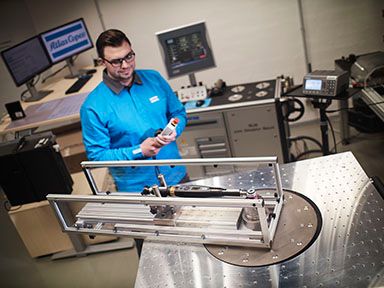
Tool Check is a torque tool verification system designed to ensure every tightening tool in your production line is accurate, reliable, and compliant before it’s used. This protects product quality, reduces waste, and helps manufacturers meet the most demanding industry requirements.
With Tool Check, manufacturers can:
- Eliminate production errors by ensuring tools are within the correct torque range.
- Lower scrap and rework costs, improving operational efficiency.
- Reduce unexpected downtime by detecting tool issues early.
- Maintain full traceability with complete digital records of every tool verification.
- Ensure compliance with quality standards like ISO, VDI and customer-specific requirements.
How does Tool Check integrate into my production workflow?
Tool Check is designed to seamlessly integrate with your existing production processes and quality systems, supporting Industry 4.0 initiatives while maintaining compliance with international standards.
Here’s how it fits into your workflow:
- Standardized Verification & Compliance
- Performs checks according to global norms like ISO 6789, ISO 5393, and VDI 2645-2.
- Generates customizable reports and audit-ready documentation, making quality reviews and certifications easier.
- Ensures repeatable, standardized quality checks across multiple production sites.
- Smart Connectivity & Integration
- Connects with MES, ERP, and QA systems to centralize tool data and production insights.
- Supports OPC UA, Open Protocol, and custom APIs, enabling easy integration into both new and legacy systems.
- Provides real-time visibility to production and quality teams.
- Advanced Analytics & Predictive Quality
- Uses SPC (Statistical Process Control) to monitor performance trends and predict tool failures before they occur.
- Improves decision-making with actionable insights for continuous process optimization.
- Reduces downtime and maintenance costs through data-driven planning.
With these capabilities, Tool Check becomes a central hub for tool verification, streamlining compliance, driving operational efficiency, and enabling manufacturers to stay ahead in a competitive, data-driven environment.
